


Biomarkers Guides
How to Optimize Your Cholesterol: A Biohacker’s Guide

Written by Eva Medved

Last updated: February 16, 2024
5 mins read
Cholesterol is essential for your body. It helps build cell membranes, produce hormones, and support other important biological functions. However, when certain cholesterol-carrying particles become elevated, they can increase your risk of cardiovascular disease.
Understanding your LDL, HDL, triglycerides, and ApoB can give you a more complete picture of your cardiovascular and metabolic health.
LDL: Often referred to as “bad cholesterol,” LDL measures the amount of cholesterol carried by low-density lipoprotein particles. Higher levels are associated with an increased risk of atherosclerotic cardiovascular disease.
HDL: Often called “good cholesterol,” higher HDL levels are generally associated with lower cardiovascular risk. However, HDL is best interpreted alongside your other lipid markers rather than viewed as protective on its own.
Triglycerides: These are fats circulating in your blood that your body uses for energy. Elevated triglycerides can be associated with insulin resistance, metabolic dysfunction, and increased cardiovascular risk.
ApoB: Apolipoprotein B is found on atherogenic particles including LDL, VLDL, IDL, and lipoprotein(a). Because each of these particles carries one ApoB molecule, ApoB provides an estimate of the total number of atherogenic particles circulating in your blood.
LDL and ApoB often move together, but not always.
Two people can have similar LDL levels while having very different numbers of atherogenic particles. This is because the amount of cholesterol carried inside each particle can vary.
Think of it this way: LDL tells you how much cholesterol is being carried, while ApoB gives you an indication of how many atherogenic particles are carrying it.
This distinction can be particularly useful in people with elevated triglycerides, insulin resistance, metabolic syndrome, or diabetes, where LDL may not fully reflect atherogenic particle burden.
Elevated LDL and ApoB are associated with a greater risk of atherosclerosis: the buildup of plaque within the arteries.
Over time, this can contribute to cardiovascular disease, including heart attack and stroke.
Rather than looking at one number in isolation, evaluating LDL, ApoB, HDL, and triglycerides together provides a more complete picture of your lipid and cardiovascular health.
Several lifestyle factors can influence your lipid profile.
Focus on healthy fats: Replacing saturated fats with unsaturated fats, such as those found in olive oil, nuts, seeds, avocado, and fatty fish, can help improve LDL and ApoB.
Increase soluble fiber: Foods such as oats, beans, lentils, fruits, vegetables, and psyllium can help reduce cholesterol absorption and support lower LDL levels.
Limit refined carbohydrates and added sugars: High intakes can contribute to elevated triglycerides and metabolic dysfunction, particularly in people with insulin resistance.
Exercise regularly: Aerobic exercise and resistance training can improve triglycerides, insulin sensitivity, blood pressure, and overall cardiovascular health.
Maintain a healthy body composition: If you are carrying excess body fat, particularly visceral fat, weight loss can improve triglycerides, insulin sensitivity, and several other cardiometabolic markers.
Avoid smoking: Smoking substantially increases cardiovascular risk. Quitting can reduce this risk even when changes in cholesterol itself are modest.
Certain supplements may help support a healthy lipid profile. Soluble fiber, such as psyllium, and plant sterols may modestly reduce LDL in some people.
However, supplements should not replace prescribed treatment when medication is indicated. Always consider medications, supplements, diet, and lifestyle together when interpreting changes in your biomarkers.
A single cholesterol result provides a snapshot, but tracking your biomarkers over time can tell you much more.
Monitoring LDL, ApoB, HDL, and triglycerides can help you understand how your body responds to changes in diet, exercise, weight, medications, and other interventions.
ApoB can be particularly valuable alongside LDL because it provides another view of atherogenic particle burden. If LDL and ApoB move in different directions, that can provide additional information about your cardiovascular risk profile.
Cholesterol is only one part of the cardiovascular risk picture.
LDL tells you how much cholesterol is being carried, while ApoB helps indicate how many atherogenic particles are circulating. HDL and triglycerides provide additional context about your overall lipid and metabolic health.
Tracking these markers together and following how they change over time can provide a more complete picture of your cardiovascular health and how it responds to lifestyle or treatment.
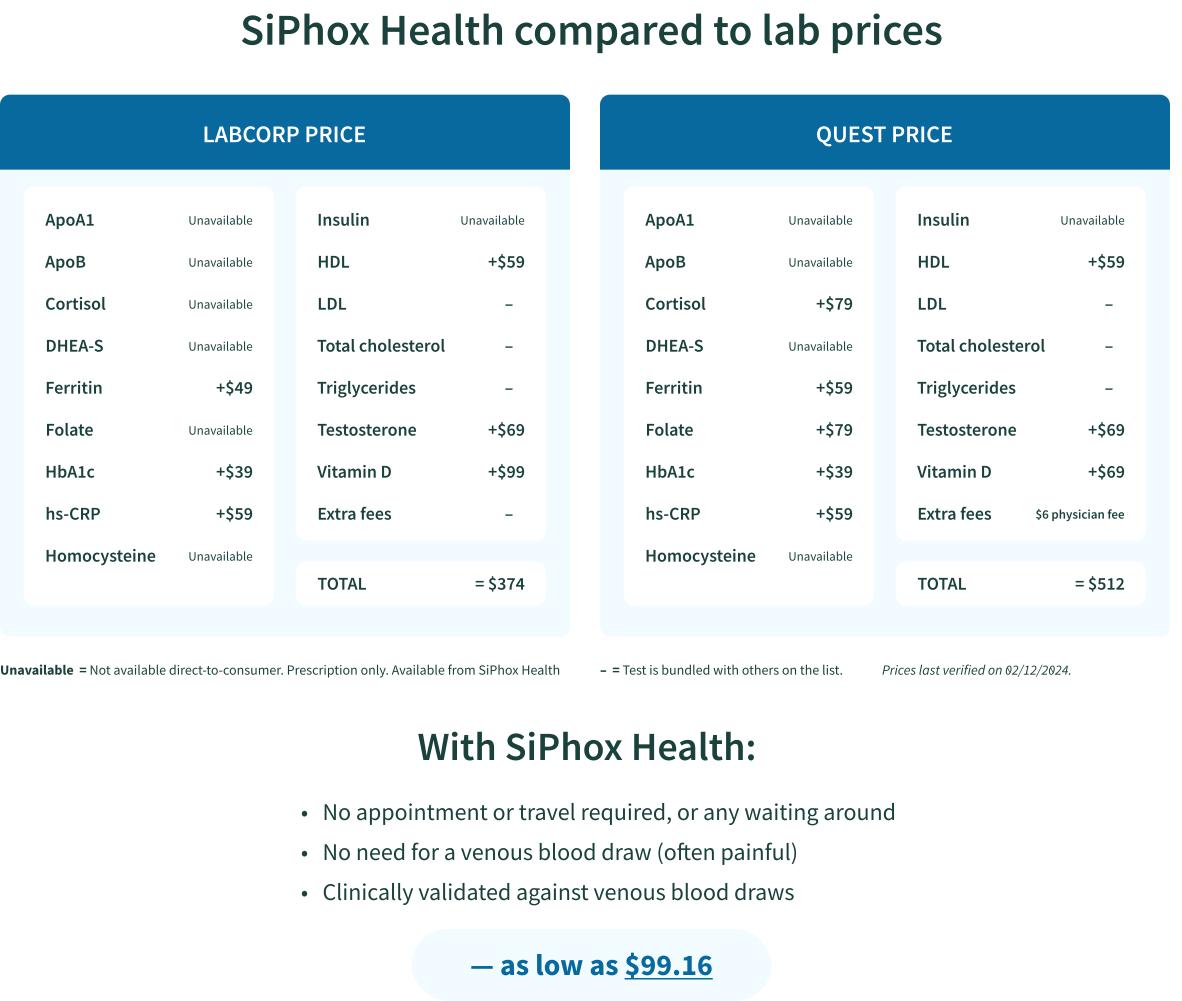
Subscribe to SiPhox and start tracking your LDL + other critical biomarkers as well as sleep, activity and heart data all in one comprehensive dashboard.
Get started
Disclaimer: If you have any medical questions or concerns, please talk to your healthcare provider. The articles on the SiPhox Health Hub are underpinned by peer-reviewed research and information drawn from medical societies and governmental agencies. However, they are not a substitute for professional medical advice, diagnosis or treatment.